
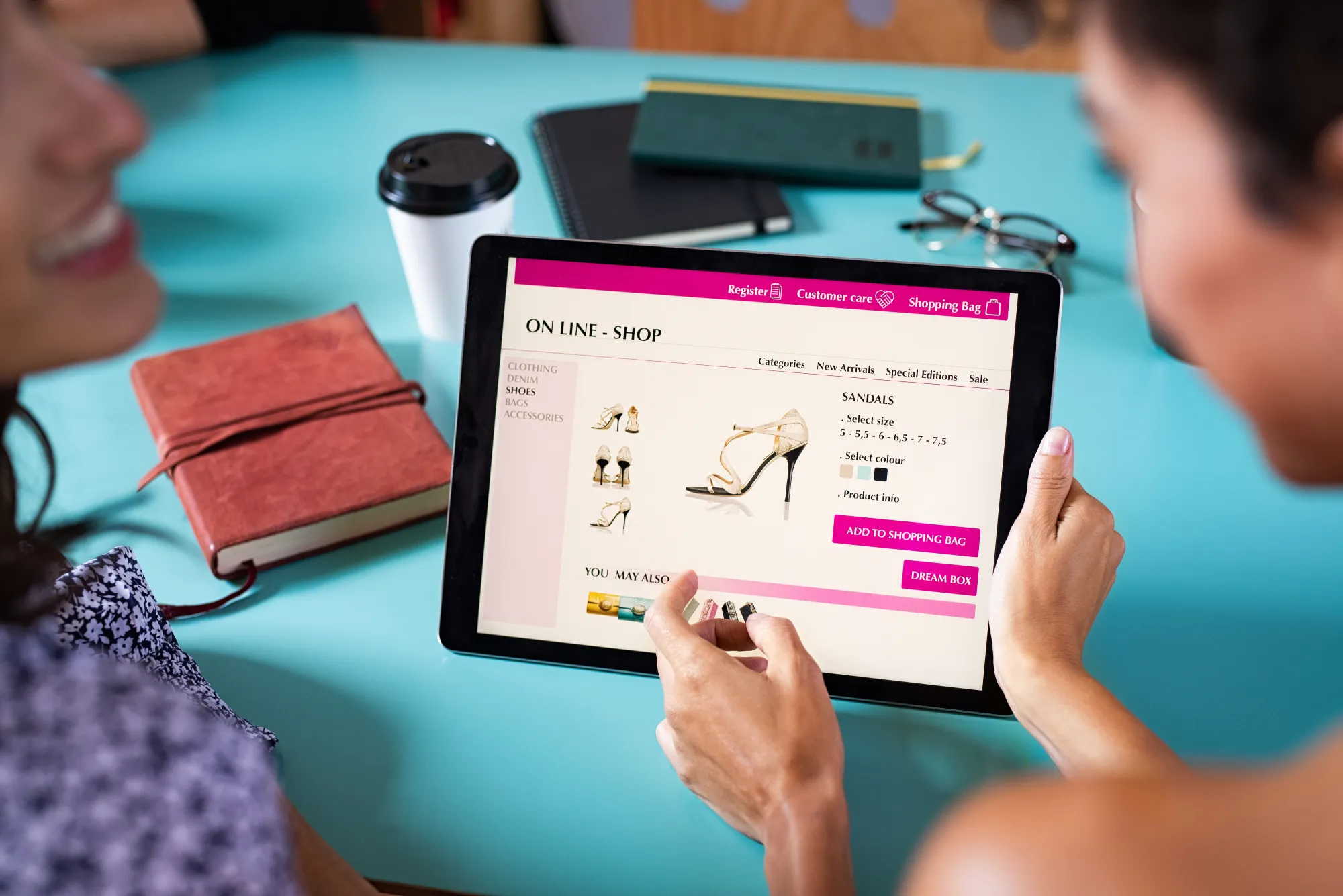
If you’ve ever looked at your Shopify analytics and thought, “We’re getting traffic… so why aren’t people buying?”, the answer is usually on the product page. Not the homepage. Not the ads. Not even the checkout. The product page is where interest becomes intent.
This high-converting product page blueprint is a practical, repeatable framework you can use to:
- audit your current product pages
- build new product pages that convert
- increase product page conversion rate without increasing ad spend
It’s designed for Shopify store owners, DTC founders, and marketers who want a product page that sells—without relying on gimmicks.
TL;DR Product Page Blueprint
Use this quick blueprint as your build checklist. If you fix nothing else, fix these.
Above-the-fold essentials (non-negotiable)
- Clear outcome-driven headline
- Strong hero media (image/video) that explains the product fast
- Price + variants + shipping clarity (no surprises)
- One primary CTA with confidence-building microcopy
- Immediate trust signals (reviews, guarantees, security, shipping/returns)
Keywords to weave naturally here: above the fold product page, product page layout, product page CTA optimization
Mid-page persuasion layers
- Benefits that answer “Why this?”
- Social proof that answers “Will it work for me?”
- Objection handling that answers “What could go wrong?”
Keywords: product page social proof, product page copywriting
Below-the-fold trust & reassurance
- Guarantee + returns + delivery details
- FAQs + sizing/fit + compatibility
- Comparison/specs for researchers
Keywords: product page trust signals
Why Most Product Pages Fail to Convert
Most product pages don’t fail because the product is bad. They fail because the page creates uncertainty.
Too much information, not enough clarity
A page can be “beautiful” and still be confusing. If a shopper can’t answer these in 5 seconds, conversion drops:
- What is this?
- Who is it for?
- Why is it better than alternatives?
- How do I buy it right now?
This is where product page UX and product page design matter more than fancy effects.
Trust gaps that kill intent
Even highly motivated visitors won’t buy if trust isn’t built quickly. Common trust gaps:
- no real reviews
- unclear returns
- hidden shipping cost/time
- unclear sizing/compatibility
- stock scarcity that feels fake
Mobile experience is an afterthought
If your product page is hard to use on a phone, it’s hard to convert—because mobile is where most shoppers browse. Product page mobile optimization isn’t a bonus, it’s the baseline.
Conversion Psychology Behind High-Converting Product Pages
This blueprint is built around a simple truth:
People buy when they feel confident.
Confidence comes from clarity + trust + motivation – friction.
Clarity beats persuasion
Persuasive copy won’t help if shoppers don’t understand what they’re buying. High-converting product pages prioritize:
- plain language
- specific outcomes
- visual explanation
- clean layout
That’s the heart of ecommerce CRO.
Motivation vs friction (the conversion equation)
Your product page should:
- increase motivation (desire, urgency, relevance)
- reduce friction (effort, confusion, risk)
Trust is a prerequisite, not a bonus
Trust is what makes a shopper willing to commit money. Without it, the best CTA in the world is just a button.
The High-Converting Product Page Blueprint (Step-by-Step)
This is the full Shopify product page optimization blueprint, organized by how shoppers scroll and decide.
Section 1: Above the Fold (Decision Starts Here)
Above the fold is where you win or lose. This section must feel instantly “safe” and instantly “clear.”
What your above-the-fold product page must include
- Headline (outcome-driven)
- Hero image/video (explains product quickly)
- Price + variants (transparent, easy selection)
- Shipping/returns snapshot (no surprises)
- Primary CTA (prominent, singular)
- Trust signals (reviews, guarantee, badges)
If your above-the-fold is weak, nothing below it will save you.
Headlines That Convert (What to Say First)
Your headline should answer: “What will this do for me?”
Not: “Introducing our premium…” or “The best ever…”
High-converting headline formulas
- Get Outcome — without Pain
- “Whiter Teeth in 7 Days—Without Sensitivity”
- Get Outcome — without Pain
- Product Type for Audience
- “Everyday Backpack for Minimalist Travelers”
- Product Type for Audience
- Specific Benefit + Proof
- “Cooling Sheets That Stay Cold All Night”
- Specific Benefit + Proof
Tip: If your headline could be used on any product, it’s too generic.
Keyword placement: integrate product page copywriting naturally in this section.
Product Imagery & Video That Reduce Doubt
Product media isn’t decoration—it’s proof.
Image hierarchy (high-converting product pages follow this)
- Hero image (clean, close, high-quality)
- Lifestyle image (in use, showing context/scale)
- Detail shots (texture, features, craftsmanship)
- What’s included (bundle components)
- Proof image (UGC, reviews photo, results)
When to use video
- Use video when it removes uncertainty: demo, setup, transformation, size comparison
- Keep it short and scannable: 15–45 seconds is often enough
- Add captions (many watch muted)
Common media mistakes
- no sense of scale
- overly edited visuals that don’t match reality
- too many similar angles (wastes scroll)
- video that’s “brand film” instead of product clarity
Pricing, Offers & Value Framing
Price isn’t just a number. It’s a value story.
Checklist for strong pricing presentation
- Show price clearly (avoid tiny font)
- If you discount, explain why (bundle, seasonal, limited run—be honest)
- Add payment options (installments can boost conversion)
- Make shipping timing explicit (“Ships in 24 hours” or “Delivery 3–5 days”)
- Use value framing: what it replaces, saves, improves
Offer clarity matters more than cleverness.
If shoppers must do math or guess, friction rises.
CTA Optimization (What Actually Drives Clicks)
Your CTA should feel obvious, safe, and immediate.
Product page CTA optimization checklist
- Use one primary CTA: Add to cart or Buy now (not 3 competing buttons)
- Keep it above the fold and accessible after scroll
- Use supportive microcopy that reduces risk:
- “Free returns”
- “Ships today”
- “Secure checkout”
- “30-day guarantee”
- Use supportive microcopy that reduces risk:
CTA copy tips
- Default: “Add to cart” works
- “Buy now” can work when intent is high
- If your product is complex, “Choose options” may be better
Mobile win: Add a sticky add-to-cart bar once the shopper scrolls past the primary CTA.
Section 2: Mid-Page Persuasion (Build Desire)
This section turns “I like it” into “I want it.”
Benefits > Features (How to Reframe)
Features are what it is. Benefits are why someone cares.
Simple feature-to-benefit translation
- Feature: “Dual-layer filter”
- Benefit: “Cleaner water without the plastic taste”
- Outcome: “Better hydration every day”
Best practice structure
- 3–6 benefit blocks max
- Each block: benefit headline + support line + optional icon
This is core product page conversion optimization.
Social Proof That Feels Real (Not Forced)
Social proof is the fastest trust builder—when it feels authentic.
Types of product page social proof (ranked by trust)
- Customer photos/videos (UGC)
- Detailed reviews (“I used it for X, got Y result”)
- Expert endorsement / press mentions (when legitimate)
- Star rating + volume (helpful, but not enough alone)
Placement suggestions
- Above the fold: star rating + review count
- Mid-page: 2–3 best reviews with photos
- Lower: full review section with filters
Make proof more believable
- show reviewer context (“skin type,” “size purchased,” “use case”)
- include negatives that are manageable (“Runs slightly small—size up”)
Overcoming Objections Before They Appear
Objections are predictable. A high-converting product page answers them before checkout.
Common objections to address
- “Will this fit me?” (size guide + model references)
- “Will it work for my situation?” (use cases, compatibility list)
- “What if I don’t like it?” (returns + guarantee)
- “How fast will it arrive?” (shipping clarity)
- “Is this legit?” (about, real reviews, support)
How to structure objection handling
- Use “accordion” FAQs for skimmability
- Put the top 3 objections before the review section
Section 3: Below-the-Fold Trust & Risk Reversal
Below the fold is where skeptical shoppers decide.
Guarantees, Returns & Policies (How to Frame Them)
A guarantee isn’t just policy—it’s confidence.
High-converting framing
- “Try it for 30 days. If you don’t love it, return it.”
- Keep it simple. Avoid legal language unless required.
Risk-reversal checklist
- Clear return window
- Who pays return shipping (state it)
- Easy steps (2–3 steps max)
- Expected refund time
This is a major product page trust signals lever.
Comparisons, Specs & Deep Details (For Researchers)
Not everyone buys emotionally. Many compare.
What to include
- Comparison table: your product vs alternatives
- Specs in a clean table (not a paragraph block)
- “What’s in the box” section
- Care instructions / materials / compatibility
Rule: Put deep specs lower, but make them easy to find (sticky nav, anchors).
Mobile-First Product Page Optimization
A product page that converts on desktop but fails on mobile is leaking money.
Thumb-friendly layout & CTAs
- CTA and variants should be reachable with one hand
- Avoid tiny selectors and dense blocks
- Use a sticky CTA after scroll
Content prioritization for small screens
- Collapse long sections into accordions
- Use progressive disclosure: show the essentials first
- Keep the first screen clean: media, value, CTA, trust
Keyword placement: naturally mention product page mobile optimization here.
Common Product Page Mistakes That Kill Conversion
Too many CTAs
Multiple CTAs create indecision. Pick one main action.
Generic copy that could fit any product
If your copy sounds like every competitor, you lose differentiation.
Overloading with apps and widgets
More widgets ≠ more value. It often increases friction and slows pages.
Hidden shipping and returns
Surprises at checkout = abandoned carts.
No clear “who it’s for”
If you don’t define the buyer, the buyer doesn’t identify.
Conversion Testing & Optimization Tips
Your product page is never “done.” It’s an asset you improve.
What to test first (highest impact)
Start here:
- Headline (value proposition clarity)
- Hero media (image vs short demo video)
- CTA placement + sticky CTA
- Social proof placement (above fold vs mid-page)
- Offer framing (bundle, free shipping threshold, guarantee messaging)
A simple product page testing framework
- Test one change at a time
- Track: add-to-cart rate, checkout initiation, purchase conversion rate
- Run tests long enough to avoid random spikes (especially if traffic is low)
When not to test
If you have very low traffic, focus on best practices + qualitative feedback first (session recordings, customer interviews, survey popups).
When to Hire Help
Sometimes you’re too close to your product to see friction clearly.
Signs you need expert help
- High traffic, low conversion rate
- Strong add-to-cart, weak purchase completion (trust/policy/shipping issues)
- Paid traffic scaling but ROAS falling
- Multiple products with inconsistent performance
What a real product page CRO engagement includes
Look for:
- product page audit (UX + copy + trust)
- prioritized recommendations (quick wins → medium → advanced)
- implementation support (theme edits, design updates)
- testing roadmap and tracking plan
If someone says “we’ll just redesign it,” that’s not CRO—that’s aesthetics.
High-Intent Product Page Questions
What makes a high-converting product page?
What is a good product page conversion rate?
It varies by niche and price point. A more useful approach: compare your product pages against each other and improve the biggest underperformers first.
How long should a product page be?
As long as it needs to be to create confidence. Simple products can convert with less. Expensive/complex products need more proof, details, and reassurance.
Where should the CTA be placed on a product page?
Do videos increase product page conversions?
Often yes—when they reduce uncertainty (demo, fit, usage). Avoid brand films that don’t explain the product.
How many reviews should a product page have?
There’s no magic number. Prioritize quality and relevance (photos, detailed use cases). Even a small number of strong reviews can outperform hundreds of generic ones.
What trust signals matter most on product pages?
Real reviews/UGC, clear returns, transparent shipping, secure checkout cues, and visible support/contact options.
How do I optimize Shopify product pages for mobile?
Use a thumb-friendly layout, simplify above-the-fold content, ensure variants are easy to select, add a sticky CTA, and collapse long sections into accordions.
Should product pages be optimized for SEO or conversions first?
Both matter, but conversion clarity comes first. You can still add SEO-friendly structure (headings, FAQ) while keeping the page highly scannable and buyer-focused.
How often should I update a product page?
Quarterly is a good cadence, and anytime you learn something new (new objections, new UGC, new FAQs, new offer structure).
Final Product Page Blueprint Checklist
Use this to audit any page.
Above the fold
- Outcome-driven headline + subheadline
- Clear hero image/video (shows product + context)
- Price, variants, availability are simple
- Shipping/returns snapshot visible
- One primary CTA with confidence microcopy
- Trust signals visible (reviews, guarantee)
Mid-page persuasion
- Benefits are scannable and specific
- Social proof includes UGC / detailed reviews
- Objections addressed (fit, shipping, results, compatibility)
Below the fold trust
- Guarantee + returns are plain-language
- Policies are easy to find
- FAQ covers top objections
- Specs/comparisons available for researchers
Mobile optimization
- Sticky CTA after scroll
- Tap targets are thumb-friendly
- Long content is collapsible
- Key info appears early
Bottom Line
A product page doesn’t convert because it’s “pretty.” It converts because it makes the buyer feel:
- clear about what they’re buying
- safe that it will work (or they can return it)
- motivated to act now
- free of friction during the decision
Use this high-converting product page blueprint to rebuild your product pages into conversion assets—not just product descriptions.